
 Patrick E. Muck, MD, RVT, FACS
Chief of Vascular Surgery
Program Director Vascular Fellowship & Integrated Residency
Good Samaritan Hospital, Cincinnati, OH
The last 2 years have turned PE from an anticoagulation-first field with sparse randomized data into one of the most active areas in cardiovascular medicine. Between 2024 and mid-2026, the first large, randomized trials of catheter-directed therapy for PE were completed. Until 2024, no adequately powered randomized trial had shown that catheter-based reperfusion improved clinical outcomes over anticoagulation alone.
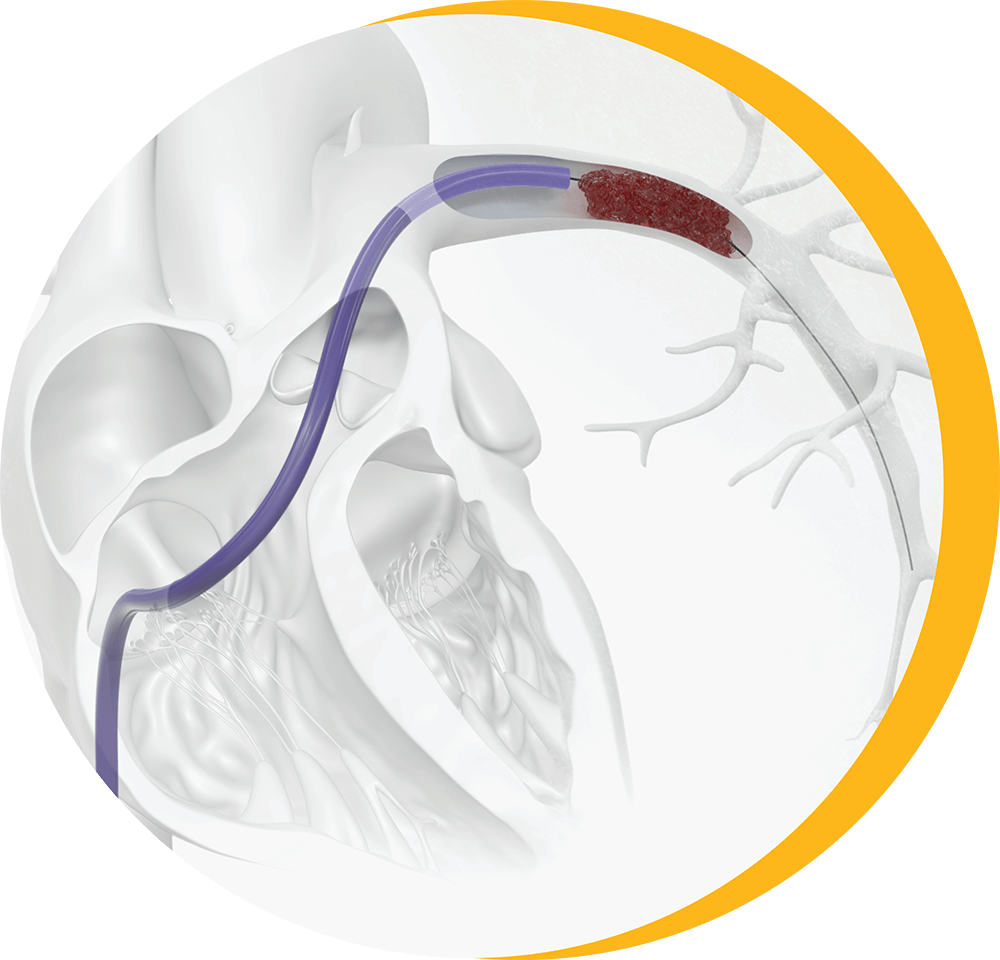
PEERLESS, published in Circulation in 2024, compared large-bore mechanical thrombectomy with the FlowTriever™ system to catheter-directed thrombolysis in 550 patients with intermediate-risk PE. Mortality and major bleeding were similar (bleeding 6.9% in both arms; 30-day death 0.4% versus 0.8%). Hospital stay was shorter and 30-day readmissions were fewer with thrombectomy.
STORM-PE, reported in Circulation in November 2025, was the first published randomized controlled trial of catheter-directed therapy versus traditional medical therapy. Intermediate high-risk PE patients were randomized to computer-assisted vacuum thrombectomy (Penumbra’s Indigo® system) plus anticoagulation versus anticoagulation alone. At 48 hours, mean RV/LV ratio reduction was 0.52 with thrombectomy versus 0.24 with anticoagulation alone. Vital signs normalized earlier; major adverse event rates were comparable. STORM-PE supports CAVT for intermediate high-risk PE patients.
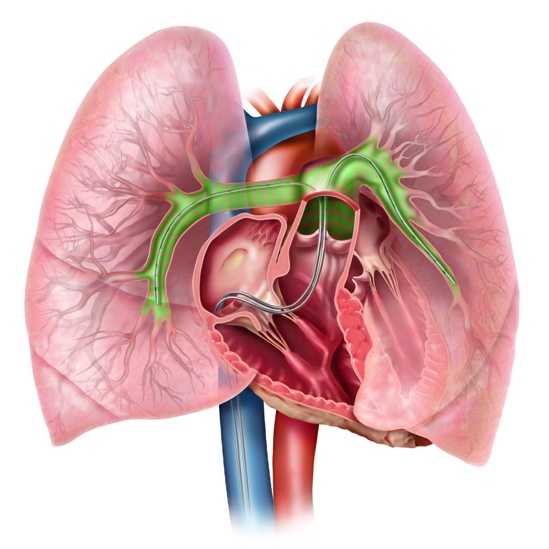
HI-PEITHO, published in the New England Journal of Medicine in March 2026 is the first large RCT of catheter-directed therapy versus anticoagulation alone with a clinical primary endpoint. Investigators enrolled 544 patients with intermediate-risk PE (RV/LV ratio ≥1.0 and elevated troponin) who also had at least 2 markers of cardiorespiratory distress. Ultrasound-facilitated catheter-directed fibrinolysis with the EKOS™ system plus anticoagulation reduced the 7-day composite of PE-related death, cardiorespiratory decompensation or collapse, or symptomatic recurrence. Major bleeding at 7 days was 4.1% versus 2.2%; no intracranial hemorrhages occurred in either arm. Death, recurrent PE, and 30-day walk distance did not differ significantly. HI-PEITHO supports catheter-directed fibrinolysis in an enriched intermediate-risk population.
Taken together, these trials support a more interventional posture for selected intermediate high-risk patients, especially those with vital-sign abnormalities in addition to RV strain. Several trials are on the horizon and will matter as much as those already reported. PEITHO-3, PE-TRACT and PEERLESS II will provide further insight in 2026 & 2027. The golden age of PE trials is finally upon us!