

 Charles B. Ross, MD, FACS, DFSVS
Vascular/Endovascular Surgery
Pulmonary Embolism Response Team
Piedmont Atlanta Hospital, Atlanta, GA
 Andrew J.P. Klein, MD, FACC, FSCAI
Interventional Cardiology
Pulmonary Embolism Response Team
Piedmont Atlanta Hospital, Atlanta, GA
 Christian Bermudez, MD, FACS
Cardiac and Thoracic Surgery
Surgical Director of Lung Transplant and CTEPH Program
Pulmonary Embolism Response Team
Piedmont Atlanta Hospital, Atlanta, GA
Management of acute pulmonary embolism (PE) has undergone momentous change over the past two decades. Recent publication of the 2026 ACC/AHA Guidelines for Management of Acute PE represent the most comprehensive approaches to care from diagnosis to post discharge status presently available.1 Much of the change in care of acute PE has been driven by new and improved interventional procedures aimed toward reduction of pulmonary artery obstruction to relieve the failing right ventricle (RV) guided by pulmonary embolism response team (PERT) collaboration. Two situations where percutaneous intervention and cardiac surgery intersect, clot-in-transit (CIT) and rescue utilization of VA-ECMO, have been part of the advancing evolution of care.
Clot-In-Transit
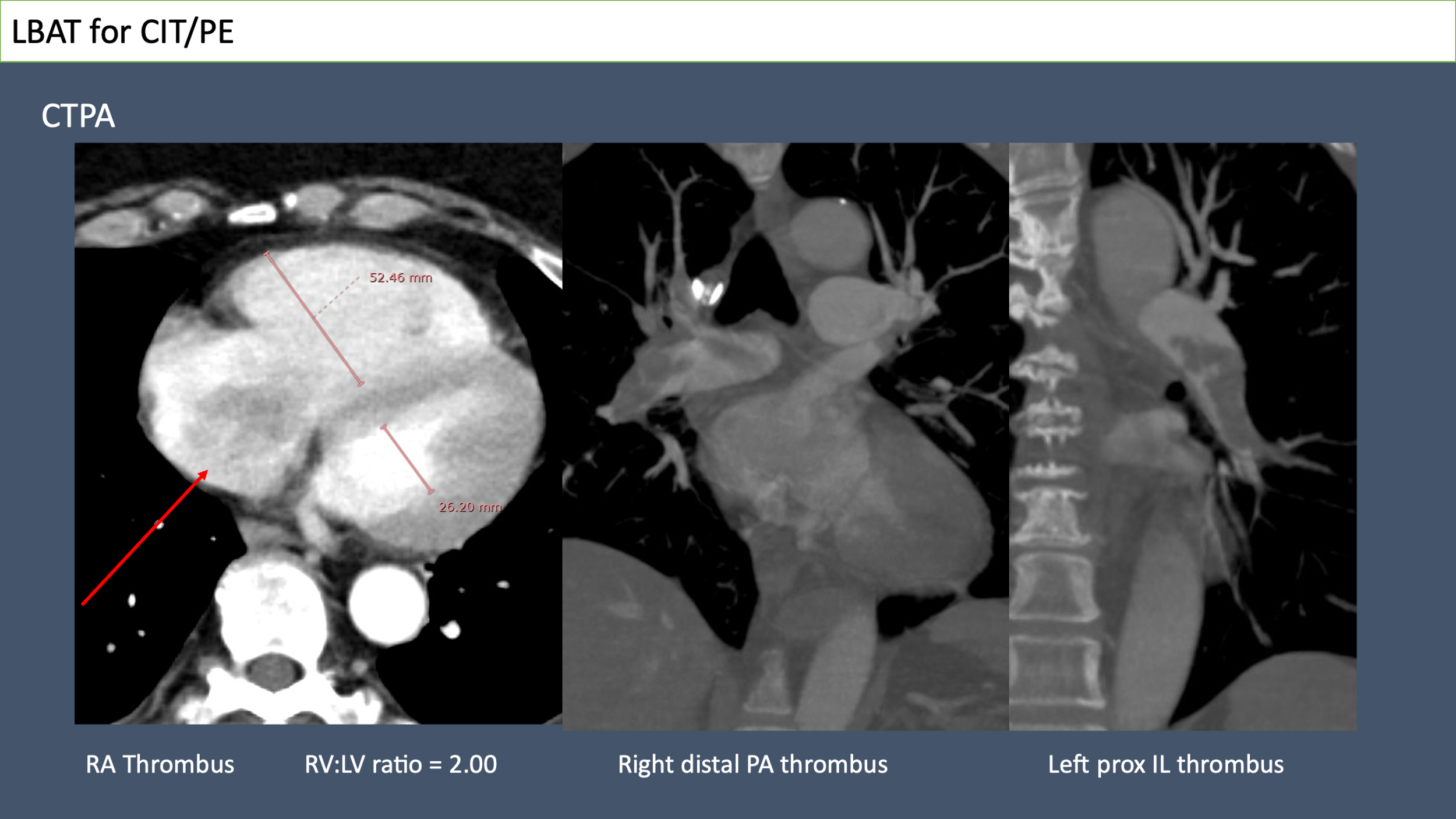
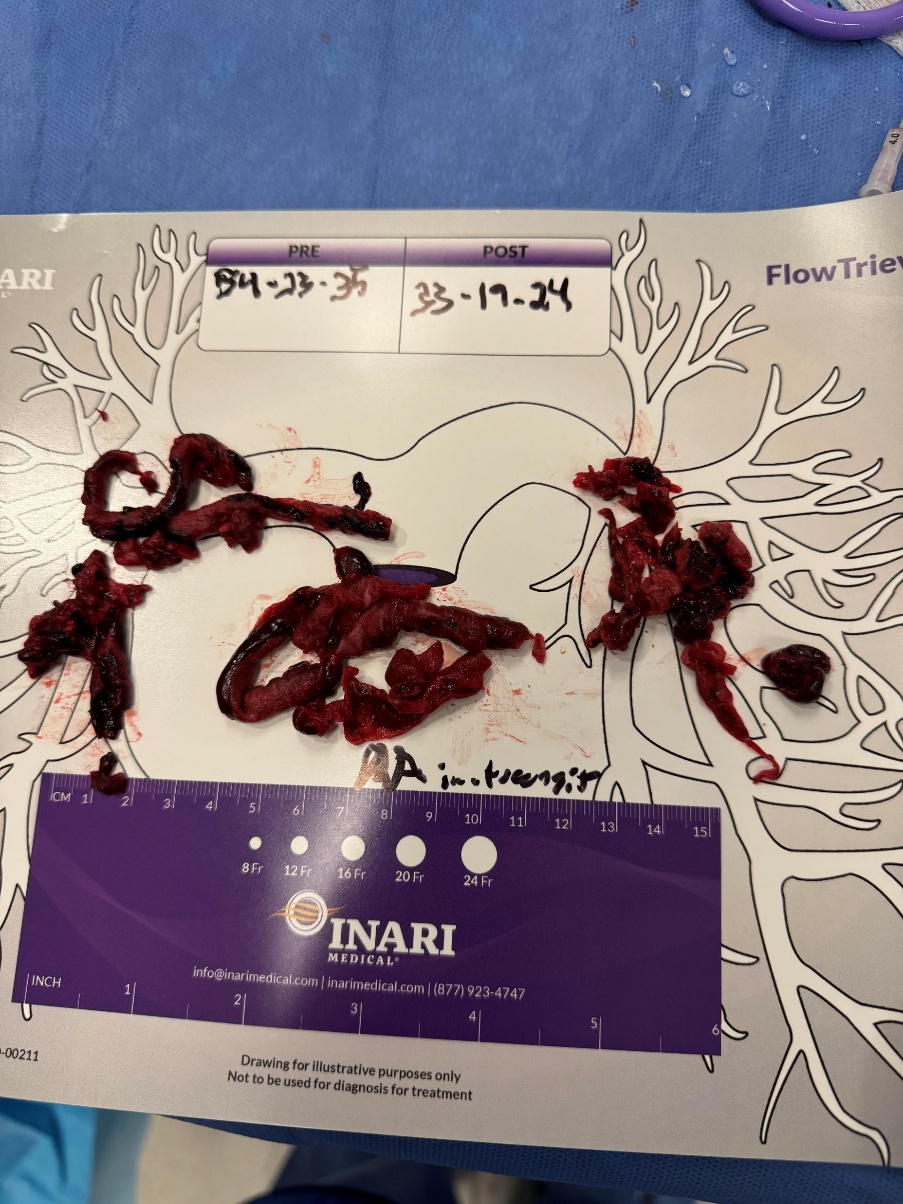
Acute thrombus identified within the superior or inferior vena cava and/or right atrium, originating from either the lower or upper extremities, may be technically considered CIT; but, the most frequent and dramatic scenario encountered involves a mobile, tumbling thrombus identified in the right atrium with associated acute PE, representing a thrombus load that has not yet embolized into the RV outflow tract but is at risk for doing so. In the landmark iCOOPER registry, a CIT was noted in 4.0% of patients, which is consistent with the more recent real-world registry of 12,000 patients from the PERT ConsortiumTM database, wherein the incidence was 4.9%.3 PE outcomes may be negatively affected by CIT, especially when a patent foramen ovale (PFO) is involved and thrombus extends into the left atrium. CIT occurs frequently enough that every PERT should expect to encounter such cases.
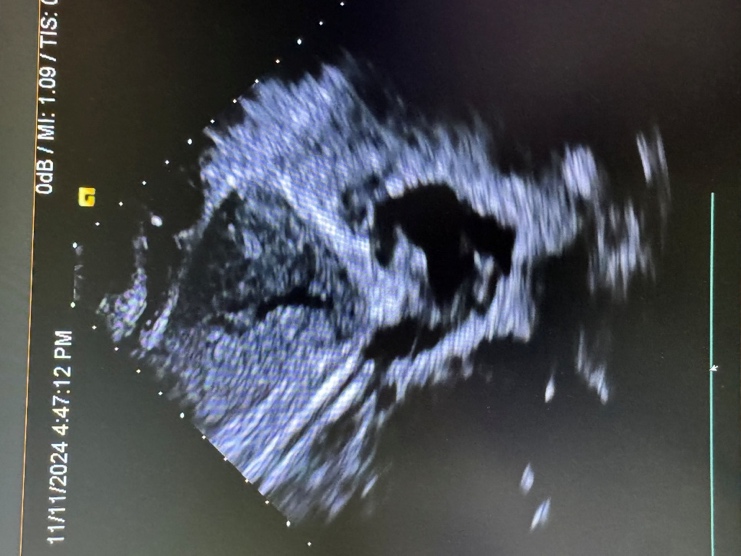
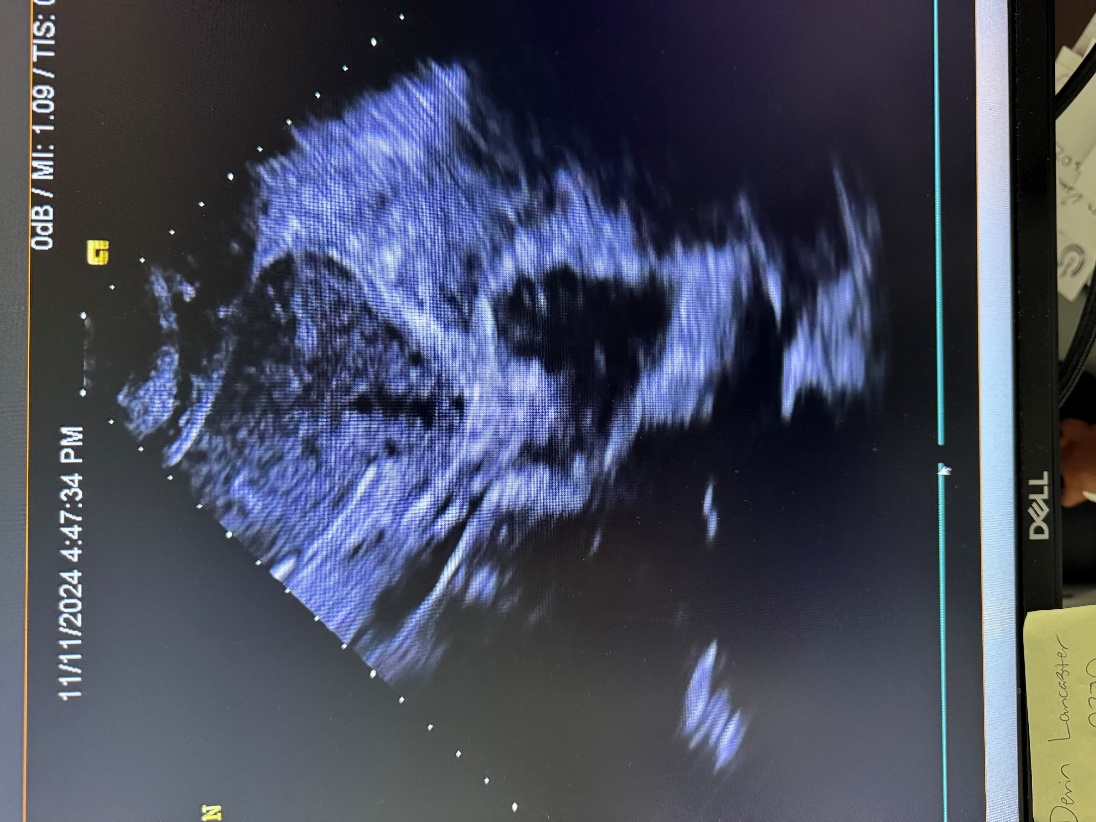
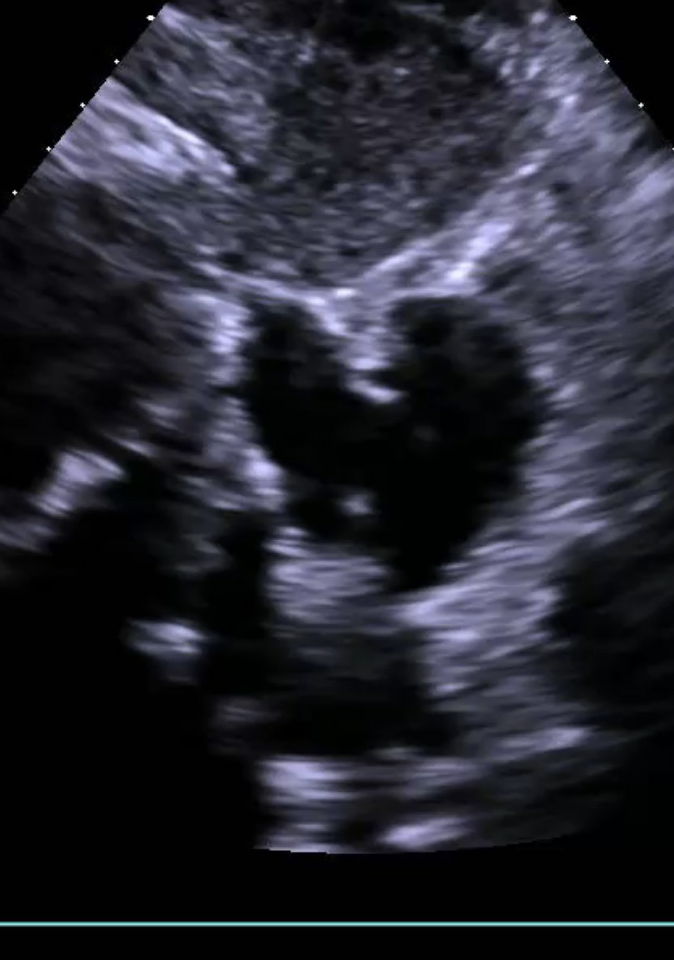
CIT may be identified on a presentation CTPA and/or transthoracic echo and is more common in patients with pre-existing congestive heart failure and in cases of severe to catastrophic PE. Although CIT was once considered an absolute indication for surgical embolectomy, our PERT management has evolved to the use of large-bore aspiration thrombectomy (LBAT) with TTE or intracardiac echo guidance in awake patients and TTE and/or TEE guidance in those already intubated. CIT in the setting of a PFO, especially with extension of thrombus into the left atrium, requires more scrutiny. Thrombus size, anatomical PFO considerations, and patient characteristics play an important role in the decision making. Although successful percutaneous management by LBAT plus cerebral protection has been reported,4 surgical embolectomy remains the gold-standard for management. In all cases of CIT, cardiac surgical input to the PERT decision is essential. The 2026 AHA/ACC guidelines state that utilization of advanced therapies over anticoagulation alone is reasonable to reduce the risk of clinical deterioration in patients with acute PE, categories C3-E2, who have a free-floating right atrial thrombus or CIT (2a recommendation).1 The complexity of management as well as the immediate need for rescue VA-ECMO should a massive CIT suddenly embolize in the RV outflow tract, in our opinion, mandates management of patients with CIT to centers with open cardiac surgery and VA-ECMO capability.
Veno arterial – extracorporeal membrane oxygenation (VA-ECMO)
Most acute PEs, when anticoagulated, are survivable. The technologic advance that has had perhaps the greatest impact in salvaging otherwise fatal acute PEs has been VA-ECMO. Survival rates have been reported as high as 61% when initiated during CPR for acute PE.5 When all indications for VA-ECMO in PE including eCPR, pre-emptive bridging combined with advanced therapy, and VA-ECMO plus simple anticoagulation alone are considered, survival ranges from 60 to 70%.6 A remarkable survival rate of 96 % was reported in 2018 from the University of Maryland where i a VA-ECMO-first protocol for massive PE was incorporated. VA-ECMO currently carries a 2a recommendation for use in patients with Class E2 acute PE. The role of pre-emptive VA-ECMO for category D and E1 PE is patient/institution specific and unknown. VA-ECMO, which can be instituted remotely, is a powerful tool which comes with its own potentially fatal complications; therefore, its use seems best when applied through collaborative PERT care or pre-defined institutional protocols for patient selection.
In summary, advances such as LBAT for CIT and the role of VA-ECMO in cases of class D and E PE hold promise for continued reductions in morbidity and mortality from complex and life-threatening acute PEs and argue strongly for collaborative PERT management.
References:
- Creager MA, Barnes GD, Giri J, et al. 2026 AHA/ACC/ACCP/ACEP/CHEST/SCAI/SHM/SIR/SVM/SVN Guideline for the Evaluation and Management of Acute Pulmonary Embolism in Adults: A Report of the American College of Cardiology/American Heart Association Joint Committee on Clinical Practice Guidelines. Circulation 2026 Mar 24;153(12):e977-e1051. doi: 10.1161/CIR.0000000000001415. Epub 2026 Feb 19. Erratum in: Circulation 2026 Jul 14;154(2):e24. doi: 10.1161/CIR.0000000000001462. PMID: 41712677.
- Torbicki A, Galié N, Covezzoli A, Rossi E, De Rosa M, Goldhaber SZ; ICOPER Study Group. Right heart thrombi in pulmonary embolism: results from the International Cooperative Pulmonary Embolism Registry. J Am Coll Cardiol. 2003 Jun 18;41(12):2245-51. doi: 10.1016/s0735-1097(03)00479-0. PMID: 12821255.
- Keeling WB, Horbal S, Rosenfield K, et al. Pulmonary Embolism in the United States: A Report From the National PERT Consortium. J Soc Cardiovasc Angiogr Interv. 2026 Jun 2;5(7):105389. doi: 10.1016/j.jscai.2026.105389. PMID: 42502334; PMCID: PMC13400114.
- Joseph S, Rengifo-Moreno P. Percutaneous Thrombectomy of Clot in Transit Lodged in the Patent Foramen Ovale Using the FlowTriever Device: Case Report. J Soc Cardiovasc Angiogr Interv. 2025 Aug 28;4(10Part A):103879. doi: 10.1016/j.jscai.2025.103879. PMID: 41268091; PMCID: PMC12629719.
- Rali P, Moores L, Criner G, et al. Venoarterial Extracorporeal Membrane Oxygenation in Massive Pulmonary Embolism-Related Cardiac Arrest: A Systematic Review Critical Care Medicine. 2021;49(5):760-769. doi:10.1097/CCM.0000000000004828
- Abdulaziz S MBBS, Kakar V, Kumar PG, et al. Mechanical Circulatory Support for Massive Pulmonary Embolism. J Am Heart Assoc. 2025 Jan 7;14(1):e036101. doi: 10.1161/JAHA.124.036101. Epub 2024 Dec 24. PMID: 39719427; PMCID: PMC12054433.
- Pasrija C, Shah A, George P, et al. Triage and optimization: a new paradigm in the treatment of massive pulmonary embolism. J Thorac Cardiovasc Surg. 2018;156:672–681.