
Beyond C-TRACT: Patient Selection, Inflow Optimization, and Contemporary Strategies for Complex Venous Disease
Post-thrombotic syndrome can leave patients with years of pain, swelling, and ulceration, yet until recently there was no randomized evidence that stenting the iliac veins actually helps. This AVF webinar goes beyond the C-TRACT trial, published in the New England Journal of Medicine, to look at which patients benefit most and why inflow may matter as much as the stent itself.
What you’ll learn
- What C-TRACT showed: in 112 randomized patients with severe post-thrombotic syndrome, iliofemoral stenting significantly reduced VCSS and Villalta scores and improved quality of life versus standard care at six months, with similar rates of major bleeding and venous thromboembolism
- How the Jolly inflow classification predicts stent patency: normal femoral or profunda inflow (types 1 to 3) kept patency above 80 percent at 24 months, versus roughly 60 percent for types 4A and 4B and 30 percent for type 5
- How contemporary inflow restoration techniques address post-thrombotic webs and scar in native veins and fibrotic material inside failed stents, with multicenter data showing luminal gain, restored patency, and lower Villalta scores
- Faculty pearls on routine distal embolic protection when debulking stents, low molecular weight heparin for the first month after inflow restoration before switching to a DOAC, and long-term anticoagulation after advanced recanalization
Agenda
- The C-TRACT trial and patient selection for iliofemoral stenting
- Inflow optimization and the Jolly inflow classification
- Contemporary strategies for complex venous disease
- Panel discussion and clinical pearls
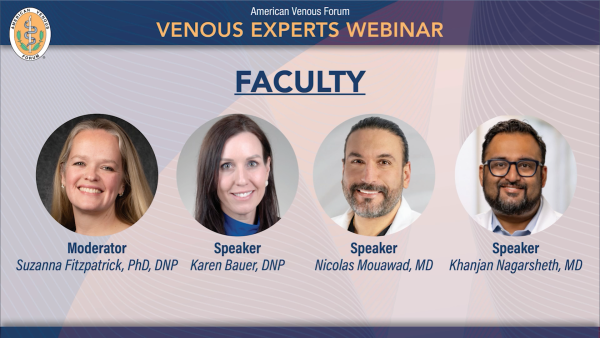
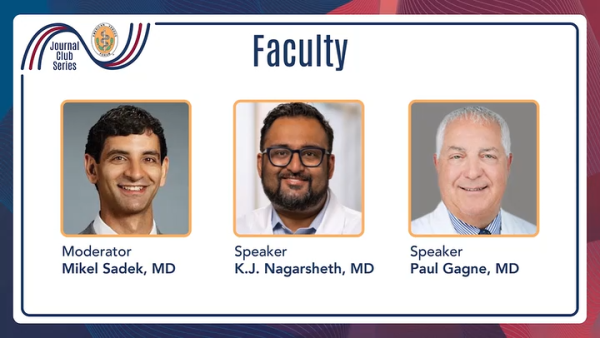
Faculty
- Adam Gwozdz, MD, PhD (Moderator)
- William Marston, MD
- Steven Abramowitz, MD
Recorded live August 24, 2026. Supported by Stryker.